Storms test trees the way a marathon tests knees. Everything that held together under easy conditions becomes visible when wind, rain, ice, and saturated soils push the limits. As a crew leader who has stood under leaning Douglas firs at 2 a.m., waited out lightning in the cab of a crane, and watched weak unions split with a sound you feel in your ribs, I can tell you that storm cleanup is as much judgment as it is horsepower. The choices made in the first hours after a blow can prevent secondary damage, shorten downtime, and cut thousands from the recovery bill.
This guide lays out how professionals approach Emergency Tree Services, and what homeowners and property managers can do to make good decisions when the yard looks like a tangle of pick-up-sticks. It touches the full spread, from rapid stabilization and Dangerous Tree Assessment and Removal to Tree Cable and Bracing, Stump Removal & Grinding, and FireSmart Tree Services for properties that live with wildfire risk. It also explains when to ask for a Certified Arborist Consultation and how Tree Pruning & Crown Shaping supports long term resilience.
What changes in a storm
Trees live with wind. They even get stronger from it as fibers align and reaction wood builds. Storms change the equation by adding extremes and stacking stresses. Waterlogged soils loosen root plate anchorage. Ice adds uniform weight to branches, doubling or tripling loads on unions that were fine under leaf-only conditions. Gusts create dynamic forces that punish defects like included bark and old lightning scars. Debris strikes can start cracks that propagate once the wind finds them.
The hidden danger is not always the broken limb you can see. It is the preloaded hinge of a partially failed trunk that looks static but stores energy like a bow. Or the root plate that rose an inch during the storm and settled back without fully reseating, leaving a tree that now leans 5 degrees and awaits the next breeze to finish the job.
First hours: triage and safety
I have seen homeowners take a chainsaw to a hung limb and turn a bad day into a tragic one. Storm scenes are deceptive. What looks like a simple bind can load the bar, pinch it, and kick back. A loose utility line may be live. A soil heave the size of a pizza tells you the root system moved. If the canopy is interlaced with another tree, cuts in the wrong order can create a slingshot.
If there is one message to absorb before anything else, it is that time is on your side if the area is stable and utilities are secured. We can remove a tree that fell on a fence two days later with less risk than we can cut a power-tangled branch in the first hour.
Here is the compact safety playbook I give to family and neighbors after storms:
- Keep distance from any downed or sagging lines, treat them as live, and call the utility before anyone else. Do not walk or park under leaners, split trunks, or hung limbs, even if they look settled. Photograph the scene from safe vantage points to document conditions for insurance. Mark hazards with tape or cones so kids, tenants, or delivery drivers do not wander in. Call an insured firm with Emergency Tree Services, and ask if a Certified Arborist Consultation is available on dispatch.
Notice what is not on that list: grab the saw. Storm cutting is a different craft than weekend firewood. The combination of spring poles, side binds, and torn fibers can behave like traps. A professional shows up with more than PPE and a big saw. We bring cribbing, blocks and pulleys, lowering devices, throw lines, adjustable slings, rescue plans, and the patience to stage the cut sequence.
How emergency crews stage a response
The rhythm of emergency work starts with a phone intake. We ask what struck what, whether anyone is trapped or injured, and if utilities are involved. Many firms maintain a 24 hour rotation for Emergency Tree Services. A standby truck carries chocks, signage, a first-aid kit, traffic cones, oil dry, and gear scaled to immediate hazards. Larger cranes, loaders, and stump grinders roll once we see the site or confirm the need.
The crew begins with a visual sweep. We look up, then down, then out. Up for hangers and canopy entanglements. Down for root plate displacement and soil cracks that tell us where loads are shifting. Out for secondary risks like propane tanks, septic fields, low retaining walls, and soft lawns that will not bear equipment weight. We map a safe work zone and plan egress for both crew and gear.
Next comes the cut plan. In storm work, the order of operations matters more than the force applied. You reduce stored energy before you release it. That might mean setting lines in a hung limb and pretensioning with a capstan winch so the piece swings under control. It might mean using a pole saw to nibble weight from the tips before a back cut frees the stub. On a split trunk, we may strap the stem with ratchet binders or place a chain and binder above the crack to keep it from opening as fibers part. All of this happens before the showy cut.
In complex scenes we bring rigging blocks and redirect lines to position loads where the wood can handle them. The best jobs end with small surprises. The worst end with large ones. Disciplined preparation, not brute strength, keeps the work on the right side of that line.
Tree Removal Services under storm conditions
Removal during calm weather is choreography. You set anchors, isolate drops, and lower clean sections. Removal after a storm resembles demolition with surgical controls. Wood is irregular, fractured, and unpredictable. If the trunk is speared through a roof, we cannot simply cut and drop. We unweight the structure first. Sometimes we lift with a knuckleboom, taking pounds off the rafters before we cut. Other times we build crib stacks to create stable contact points. We pay attention to nail pops and drywall cracks that suggest stress on the frame.
Crane-assisted removals raise the stakes. A 30 ton crane can make a job safer, or it can multiply risk if the pick weight is miscalculated or the ground fails under outriggers. We use conservative load charts, inflate estimates for wet wood and trapped water, and test each pick with small preloads before commit. One December nor’easter, a red oak lay across a second story with the root ball still half seated. We chained the root plate to a buried deadman, set two picks with spreader bars to avoid fiber crush, then feathered the tension to free the trunk without peeling siding. It lasted three hours, not the one the client had hoped for, but the extra time kept the house intact.
Pricing and timing for storm removals vary widely by region, tree size, and access. A simple yard fall with clear space might run in the low four figures. Complex, crane-assisted removals that involve structure stabilization often rise to mid four or low five figures, especially when night work, traffic control, or utility coordination is required. Reputable firms explain the drivers of cost before they start and document the work for carriers.
Dangerous Tree Assessment and Removal: reading the wood
Not every storm-damaged tree needs to go. The call to remove or retain rests on defect type, residual strength, and site targets. A Certified Arborist Consultation brings clear criteria to bear. We probe cavities, sound buttress roots with a mallet, and use a resistograph when needed to measure remaining wall thickness. A common rule is the t/R ratio, where residual wall thickness should exceed a third of radius in hollow stems. That is a guideline, not dogma. Species matters. White oak tolerates hollows better than silver maple. Lean matters. Target zones matter even more.
Cracks are the red flags that push toward removal, especially longitudinal splits that run with the grain near unions or along the trunk. U-shaped unions with broad, well developed collars are sturdier than V-shaped ones with included bark. After wind events, compression cracks on the leeward side of the stem, often subtle and easy to miss, tell you fibers yielded. If you spot those paired with a new lean and soil lift, the removal decision writes itself.
I remember a line of spruces after a heavy wet snow. Three leaned just a little more than last winter’s tilt. The fourth showed a shallow, fresh dish at the butt and hairline soil fissures around half the root plate. We anchored the three with temporary guy lines and scheduled Tree Cable and Bracing for the main leader unions. The fourth came out that afternoon. Two months later, a blow from the southwest finished the neighbor’s unaddressed version of that same tree. Good assessment prevents those outcomes.
Stabilization using Tree Cable and Bracing
Cabling and bracing is not a cure for bad structure. It is a load sharing strategy. Dynamic cables installed high in the crown connect co-dominant leaders so they move together, reducing peak strain on weak unions. Thru-rod bracing pins cracked stems to prevent propagation. Storms can expose the need for both.
The craft lies in placement and specification. Hardware must match expected loads, and anchor points need sound wood. Often, we pair cables with selective pruning to reduce sail area. Many clients ask whether steel or synthetic cables are superior. Steel is durable and familiar, but synthetic systems offer elasticity that is closer to natural movement and can be gentler on trees with internal decay. Both require inspections, usually annually, and after major wind events. Cables installed as panic measures without follow-up are false security.
The quiet power of Tree Pruning & Crown Shaping
Storm preparedness starts years before any forecast. Structural pruning on young and mid-aged trees pays the biggest dividends. Reducing end weight on overextended limbs, subordinating co-dominant leaders, and removing deadwood change the physics. Trees that drop a dozen small pieces in a storm suffer less than trees that carry a single, heavy limb that tears out a third of the crown.
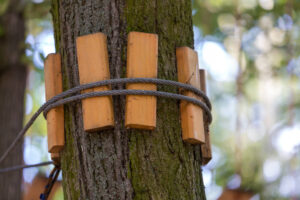
A reasonable target is to remove no more than 15 to 20 percent of live crown in a session, and to respect branch protection zones at the collar so wounds close efficiently. Crown shaping is not cosmetic fluff. It builds architecture that sheds wind and sheds failure. After an ice storm in 2018, two almost identical sugar maples in front of a school told the story. The one we had pruned in three rounds over six years lost twigs and a few small laterals. The one left to its own devices split one co-dominant and required half removal, changing its silhouette and shading pattern for good.
Stump Removal & Grinding: finishing the job safely
Storm removals often stop once the trunk is off the roof and the yard is tidied. Stumps then linger and become tripping hazards or magnets for fungal decay that can spread to adjacent trees. Stump grinding clears the way for replanting and improves site safety. We size grinders to the job. Small gated yards demand compact, 25 to 35 horsepower machines that can pass a 36 inch gate. Large field stumps justify tracked grinders with 60 to 100 horsepower and a swing of 60 inches or more.
Depth targets vary. For lawn restoration, 6 to 8 inches below grade often suffices. For replanting in the same location or for hardscape installations, 12 to 16 inches reduces future settlement. Chips mixed with soil make poor backfill if left thick. We typically remove excess chips, backfill with mineral soil, and compact lightly to avoid future divots. The cost for Stump Removal & Grinding ranges by diameter, access, and obstacles like rocks or utilities, and many firms set a base fee then add per inch measured across the widest point.
FireSmart Tree Services: thinking beyond wind and ice
In wildfire country, storm work and fire work overlap. Windstorms break tops and scatter slash that becomes ladder fuel later in the season. FireSmart Tree Services tackle both structure protection and vegetation management. The defensible space concept divides the area around a building into zones with different treatments. Near the structure, within the first 1.5 to 3 meters in metric plans or 5 to 10 feet in imperial, we aim for non-combustible ground cover, pruned limbs clear of roofs, and no wood piles. Out to 30 meters or about 100 feet, we manage continuity, spacing crown to crown and crown to ground to slow fire spread.
Practical moves include pruning conifers so the lowest live branches are 2 to 3 meters off the ground where growth habits allow, thinning dense thickets, and removing dead and downed wood that would torch. Choices vary by species and site. You do not prune a mature western redcedar to the same height as a young lodgepole pine. A Certified Arborist Consultation aligns FireSmart concepts with tree health and your aesthetics, preserving shade and screening while sharply reducing risk.
One hillside client lived with steady summer winds and a neighbor’s unmanaged brush. We combined selective removals, pruning, and mulching with coarse gravel near the deck. We also installed a gravel turn-around to improve access for emergency vehicles. The yard looked natural, not scalped, and the changes paid off when a small grass fire two lots away crept, then lost momentum crossing the thinned zone.
What insurance adjusters look for, and how to help them
Most policies distinguish between trees that damage covered structures and trees that fall without hitting anything. Coverage for debris removal usually activates when a covered structure is involved. Adjusters like documentation. Date-stamped photos before and after, written descriptions of the event, and line item invoices for Tree Removal Services and any temporary repairs to roofs or fences make the claim process smoother.
Storm pricing often includes premium rates for off-hours response. That is not gouging, it reflects overtime wages, night premiums for crane operators, and coordination costs. Good firms provide transparent explanations. When a carrier asks why a crane was necessary, a short paragraph stating the roof pitch, access constraints, and reasons the load could not be rigged and slid without a lift can make the difference in reimbursement.
To speed claims, gather these items before the estimator arrives:
- Your policy number and the adjuster’s contact information if already assigned. Photos or videos taken safely from multiple angles that show the initial damage. A sketch or notes on utilities, septic, and underground lines to guide safe work. Any prior arborist reports or maintenance records for the affected trees. A list of temporary measures taken, such as tarps or bracing, with receipts.
Permits, utilities, and the alphabet soup of coordination
Cities and counties vary. Some require emergency permits only after the fact, others waive them when a tree endangers life or property. HOAs add their own layers, especially around common area trees. Utilities hold absolute priority. We do not cut within the minimum approach distances to energized lines. A utility forester or line crew must de-energize or clear before we proceed. Gas lines, fiber optics, and irrigation mains also shape plans. Before grinding stumps, we call for locates. The delay feels painful in the moment but beats buying a gas leak or a cut data line.
Equipment choices that reduce risk
Homeowners sometimes assume the biggest saw equals the best saw. Storm work flips that notion. We carry a spectrum: top-handle saws with 12 to 14 inch bars for aerial work, mid-size ground saws with 18 to 20 inch bars for bucking, and longer bars for trunk piecing. More important are the wedges, the felling jacks, and the mechanical advantage in the rigging kit. A 5 to 1 or 10 to 1 pulley system can pre-tension a limb with precision that manual tugs cannot match, and a bollard or portawrap turns chaotic swings into smooth, controlled lowers.
Cribbing blocks save roofs and fingers. We build crib stacks to support weight without punching through shingles. Mats and ground protection prevent rutting, which matters when you look at the yard six months later. The client who watched us change the approach to save their peony bed tends to call again.
When a Certified Arborist Consultation is the best next step
After the rush, you need a plan for the remaining trees. Not everything broken is obvious, and not everything standing is sound. A Certified Arborist Consultation gives you a prioritized list: prune, monitor, cable, or remove. It also sets maintenance cycles. Some trees ask for three year pruning intervals, others five. On many properties, a modest annual budget spent on inspection and strategic Tree Pruning & Crown Shaping prevents the kind of structural overloads that make headlines.
An arborist can also advise on species selection for replacements. In wind corridors, you prefer species with strong wood and good branch attachment. In ice-prone areas, narrow crowns or flexible species like larch handle loads better than brittle quick growers. That decision is money in the bank for the next 30 years.
Real world snapshots: three short cases
A coastal blow dropped a Monterey pine across a driveway, pinning a car. The utility line ran parallel to the trunk. We called the utility, staged cones, and waited rather than risking conductor contact. Two hours later, with the line confirmed safe, we set a redirect to pull the limb away from the car, then pieced the trunk using progressive cuts to avoid crushing sheet metal. The owner drove to work the same day.
An ice storm split a Bradford pear at the crotch, a familiar pattern with that cultivar. Rather than remove the entire tree, we advised and installed a bracing rod through the union, added a static steel cable, and reduced both leaders by 15 percent to rebalance loads. The client knew we had bought time, not immortality, and scheduled a replacement planting two seasons out. The braced tree served as screening until the new serviceberry reached size.
A mountain property with a history of ember showers called in spring. We combined FireSmart Tree Services with storm cleanup from winter winds: limbed up conifers to 8 feet where appropriate, spaced crowns, chipped slash, and created a 5 foot gravel band around the cabin. We also installed a mesh guard for a vent the owner had not noticed was unscreened. That summer a small lightning fire crept onto the lot but laid down in the modified zone until volunteers knocked it out.
The limits of do it yourself, and where help saves money
There are tasks suited to handy owners. Raking small debris, cutting manageable limbs on the ground with proper PPE, and tarping small roof openings if access is safe are reasonable. Taking a saw to a trunk under tension, working near lines, or climbing to reach hangers are not. The difference is the unseen load paths. Professionals read them through experience and tools. I have explained to clients why the simple looking cut carries the largest risk. Once you see the spring loaded fibers and feel a stem shift under the bar, you carry that caution to the next job. Until then, trust those who have.
Most clients are surprised that a cautious, staged approach often costs less than a rush. Breaking the job into stabilization, removal, and restoration lets insurance fund the right parts and avoids collateral damage that creates new bills.
After the cleanup: restoring resilience
A yard after storm work can look stripped. Recovery starts with soil. Heavy rain followed by equipment traffic compacts top layers. Aeration, compost topdressing, and mulch rings under retained trees help roots breathe again. Pruning wounds deserve inspection one season later. Cables installed in a hurry should be revisited to confirm tension, placement, and hardware integrity.
Think seasonally. In the first growing season after heavy pruning or storm loss, supplement watering during dry spells. Trees that lost significant foliage run metabolic deficits. A slow, deep soak once a week in drought spells is better than daily sprinkles. Avoid heavy fertilization unless a soil test suggests deficiency. Stimulating fast, weak growth is not the objective. Strong, well lignified wood is.
Choosing a partner for the work
The market fills after storms. Trucks appear with magnetic signs and promises. Ask for proof of insurance, including workers’ compensation and liability. Ask how the firm handles utility coordination, and whether they offer a Certified Arborist Consultation to inform decisions. Look for companies that can articulate the cut plan before they start. Equipment matters, but the plan reveals the craft.
References help, but recent, relevant experience helps more. The crew that removed a 40 inch diameter cottonwood from a soft backyard using mats and sectional rigging is a better match for your site than the lowest bidder who has never run a crane or tied a running bowline.

Final thought: the best time to plan is before the forecast
Storms are not if, https://rylanflyf662.yousher.com/assessing-risk-dangerous-tree-assessment-and-removal they are when. The properties that fare best combine maintenance, clear priorities, and relationships. If we have pruned your trees on a cycle, mapped your utilities, and talked through what you want to protect first, the 2 a.m. Call turns from panic to a plan. The work feels nearly ordinary, even when the sky says otherwise.
If you take nothing else from a veteran’s take on Emergency Tree Services, take this: invest a little in structure and assessment when the weather is quiet. When it is not, lean on professionals who respect wood, physics, and your property in equal measure. That blend of judgment and skill is what keeps storms from becoming stories you would rather not tell.
Ace Tree Services Ltd.
Name: Ace Tree Services Ltd.Address: 4656 Wallace Hill Road, Kelowna, BC
Postal code: V1W 4C2
Phone: 250-212-9593
Website: https://acetree.ca/
Hours:
Monday: 7:00 AM - 5:00 PM
Tuesday: 7:00 AM - 5:00 PM
Wednesday: 7:00 AM - 5:00 PM
Thursday: 7:00 AM - 5:00 PM
Friday: 7:00 AM - 5:00 PM
Saturday: 7:00 AM - 5:00 PM
Sunday: Closed
Open-location code (plus code): RHF8+8G Kelowna, British Columbia, Canada
Map/listing URL: https://www.google.com/maps/place/Ace+Tree+Services+Ltd./@49.8232606,-119.4337283,659m/data=!3m2!1e3!4b1!4m6!3m5!1s0x537d8b1d074815c5:0x450b88afa7a41435!8m2!3d49.8232606!4d-119.4337283!16s%2Fg%2F11ydkpnh22
Embed iframe:
"@context": "https://schema.org", "@type": "HomeAndConstructionBusiness", "name": "Ace Tree Services Ltd.", "url": "https://acetree.ca/", "telephone": "250-212-9593", "address": "@type": "PostalAddress", "streetAddress": "4656 Wallace Hill Road", "addressLocality": "Kelowna", "addressRegion": "BC", "addressCountry": "CA" , "openingHoursSpecification": [ "@type": "OpeningHoursSpecification", "dayOfWeek": "https://schema.org/Monday", "opens": "07:00", "closes": "17:00" , "@type": "OpeningHoursSpecification", "dayOfWeek": "https://schema.org/Tuesday", "opens": "07:00", "closes": "17:00" , "@type": "OpeningHoursSpecification", "dayOfWeek": "https://schema.org/Wednesday", "opens": "07:00", "closes": "17:00" , "@type": "OpeningHoursSpecification", "dayOfWeek": "https://schema.org/Thursday", "opens": "07:00", "closes": "17:00" , "@type": "OpeningHoursSpecification", "dayOfWeek": "https://schema.org/Friday", "opens": "07:00", "closes": "17:00" ], "geo": "@type": "GeoCoordinates", "latitude": 49.8232606, "longitude": -119.4337283 , "hasMap": "https://www.google.com/maps/place/Ace+Tree+Services+Ltd./@49.8232606,-119.4337283,659m/data=!3m2!1e3!4b1!4m6!3m5!1s0x537d8b1d074815c5:0x450b88afa7a41435!8m2!3d49.8232606!4d-119.4337283!16s%2Fg%2F11ydkpnh22"
Ace Tree Services Ltd. provides professional tree removal, pruning, stump grinding, emergency response, and arborist consultations for properties in Kelowna and across the Okanagan Valley.
The company works with homes, commercial properties, and municipal settings where tree work needs to be planned carefully around buildings, fences, driveways, landscaping, and other site constraints.
Based in Kelowna, the team is positioned to help nearby neighbourhoods and surrounding Okanagan communities with routine tree care and time-sensitive storm cleanup.
Customers looking for careful tree work often want a crew with certified arborist training, insurance, and a methodical approach to higher-risk removals.
Services also include dangerous tree assessment, cabling and bracing, and wildfire risk reduction tree work for properties that need longer-term planning.
To request a quote or discuss tree care options, call 250-212-9593 or visit https://acetree.ca/.
A public map listing is available to help customers confirm the business location and get directions before a site visit or estimate.
For Kelowna property owners who need pruning, removals, or emergency tree help, a local tree service can make it easier to schedule site-specific recommendations and cleanup.
Popular Questions About Ace Tree Services Ltd.
What services does Ace Tree Services Ltd. provide?Ace Tree Services Ltd. lists tree removal, stump removal and grinding, tree pruning and crown shaping, emergency tree service, arborist consultation, dangerous tree assessment and removal, cabling and bracing, and wildfire risk reduction tree work.
Who does Ace Tree Services Ltd. serve?
The company describes its work as serving homes, businesses, and municipalities in Kelowna and across the Okanagan Valley.
Is emergency tree help available?
Yes. Emergency service is listed for downed or uprooted trees, dangerous tree assessment, stabilization work, and branch cleanup. If a tree is near power lines, the safest first step is to stay clear and contact the utility provider before any tree work begins.
Do I always need a permit to remove a tree?
Not always. Permit requirements can depend on where the tree is located and whether it is near a creek, lake, steep slope, or another protected area. It is best to check local rules for the specific property before removal work starts.
How deep does stump grinding usually go?
Standard stump grinding is typically described as going about 6 to 12 inches below ground level, which is often enough for grass or surface landscaping. Deeper grinding may be possible when site plans call for it.
How much of a tree can be safely removed at one time?
That depends on the species, age, health, and structure of the tree. In practice, good pruning is usually about removing the right limbs for health, clearance, and structure rather than chasing a fixed percentage.
What are common signs that a tree may be dangerous?
Large dead limbs, visible cracks, a new lean, root damage, canopy dieback, or storm-related damage can all be warning signs. Trees near structures deserve extra attention when any of those issues appear.
What is cabling and bracing in tree care?
Cabling and bracing are support systems used to reduce the risk of failure in trees with structural weaknesses that may still be worth preserving. They are generally used to add support, not to replace good assessment and ongoing maintenance.
How do I contact Ace Tree Services Ltd.?
Call 250-212-9593.Website: https://acetree.ca/.
Landmarks Near Kelowna, BC
Downtown KelownaThe downtown core is a practical reference point for lakefront neighbourhoods, mixed-use streets, and central residential properties. If your property is near downtown, tree pruning, removals, and cleanup can be planned around tighter access and nearby structures.
Knox Mountain Park
This well-known park north of downtown is a recognizable landmark for nearby homes and hillside properties. If you are close to this area, ask about tree assessment, trimming, or removal work suited to sloped sites.
Mission Creek Greenway
The greenway runs through several parts of Kelowna and is a useful landmark for nearby residential areas. If your property borders or sits near this corridor, site-specific tree planning is especially important.
Pandosy Village
Pandosy is one of Kelowna’s most recognizable neighbourhoods and a common reference point for south-central properties. If you are nearby, request help for pruning, removals, or storm cleanup around homes and small commercial sites.
Rutland
Rutland is a major east Kelowna neighbourhood with a mix of residential and local commercial properties. If you are located in or near Rutland, tree work can be scheduled for both routine maintenance and urgent situations.
Landmark District
This central business-focused area is a practical landmark for offices, service properties, and nearby residential streets. If your site is near the district, ask about careful tree work around parking, access lanes, and built-up lots.
Kelowna’s North End
The North End sits on the edge of downtown and is a useful reference for nearby homes, industrial sites, and commercial properties. If you are in this part of the city, request tree care based on the layout and constraints of the lot.
Airport District
The Airport District is a recognizable north Kelowna reference point for surrounding properties and access routes. If you are in this area, ask about tree services for residential acreage, commercial sites, or roadside cleanup needs.
Glenmore & Dilworth
These established Kelowna neighbourhoods are useful landmarks for central and north-central service calls. If your property is nearby, pruning and removal work can be tailored to mature trees and established landscapes.
Highway 97 Corridor
Highway 97 is one of the city’s main travel routes and a common way to describe location within Kelowna. If your home or property is just off the corridor, a clear landmark reference can help speed up quote scheduling and site planning.